
25.04.2023
News
17.04.2023
12.09.2022
02.09.2022
30.08.2022
29.08.2022
24.08.2022
22.08.2022
19.08.2022
18.08.2022
16.08.2022
12.08.2022
09.08.2022
08.04.2022
04.04.2022
31.03.2022
22.03.2022
07.03.2022
01.03.2022
14.02.2022
11.02.2022
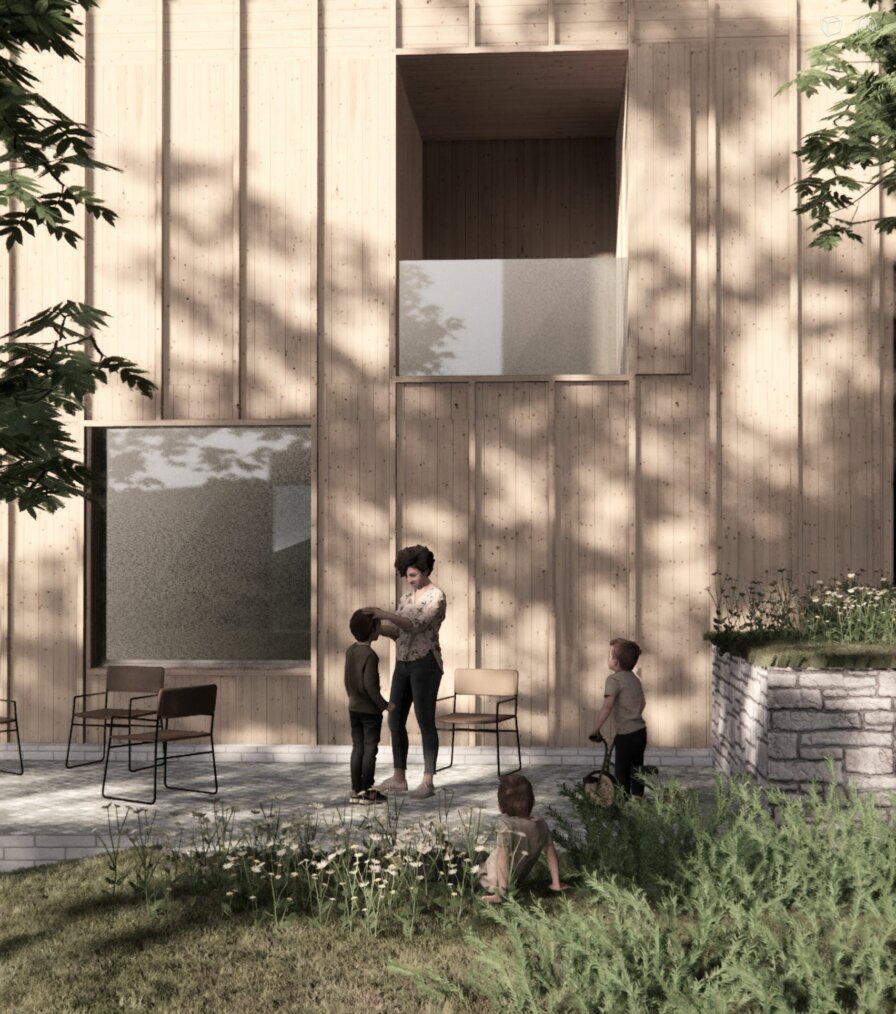
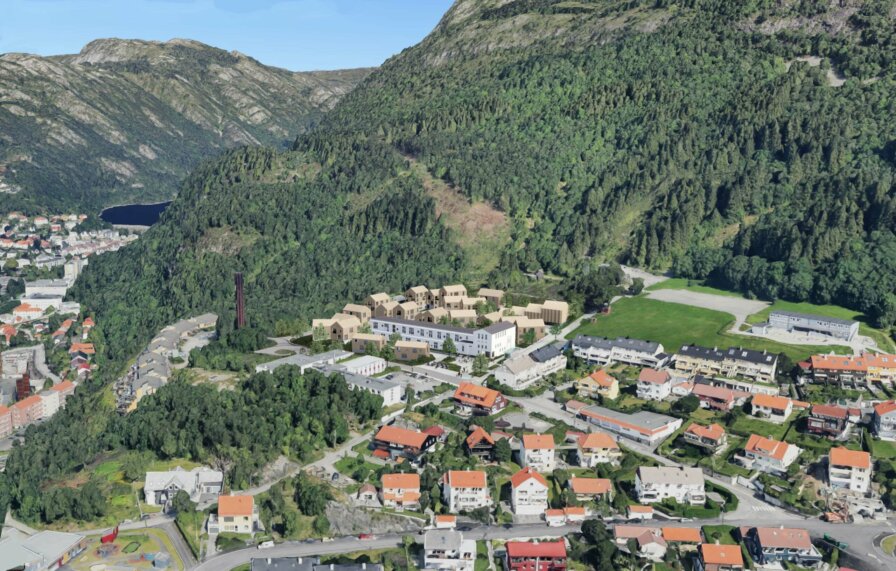
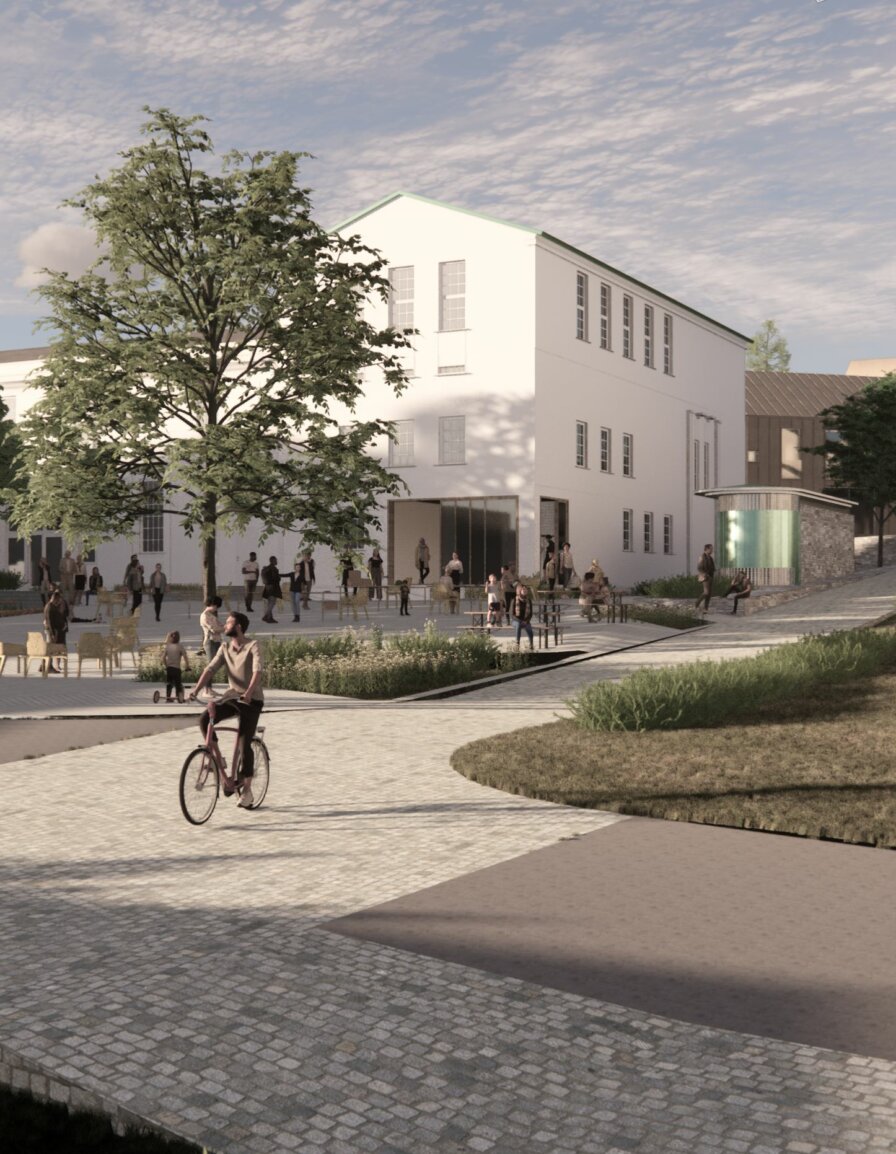
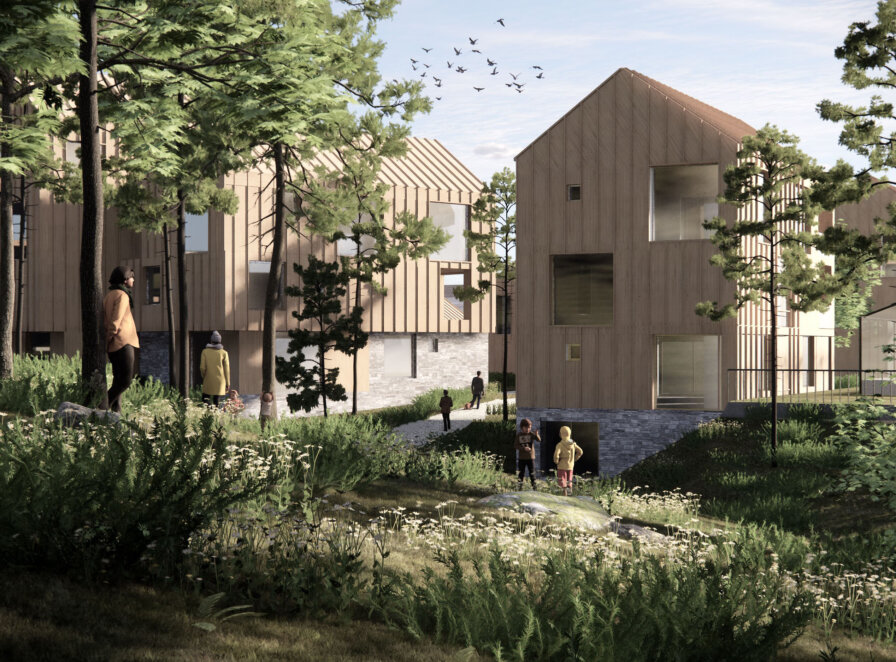
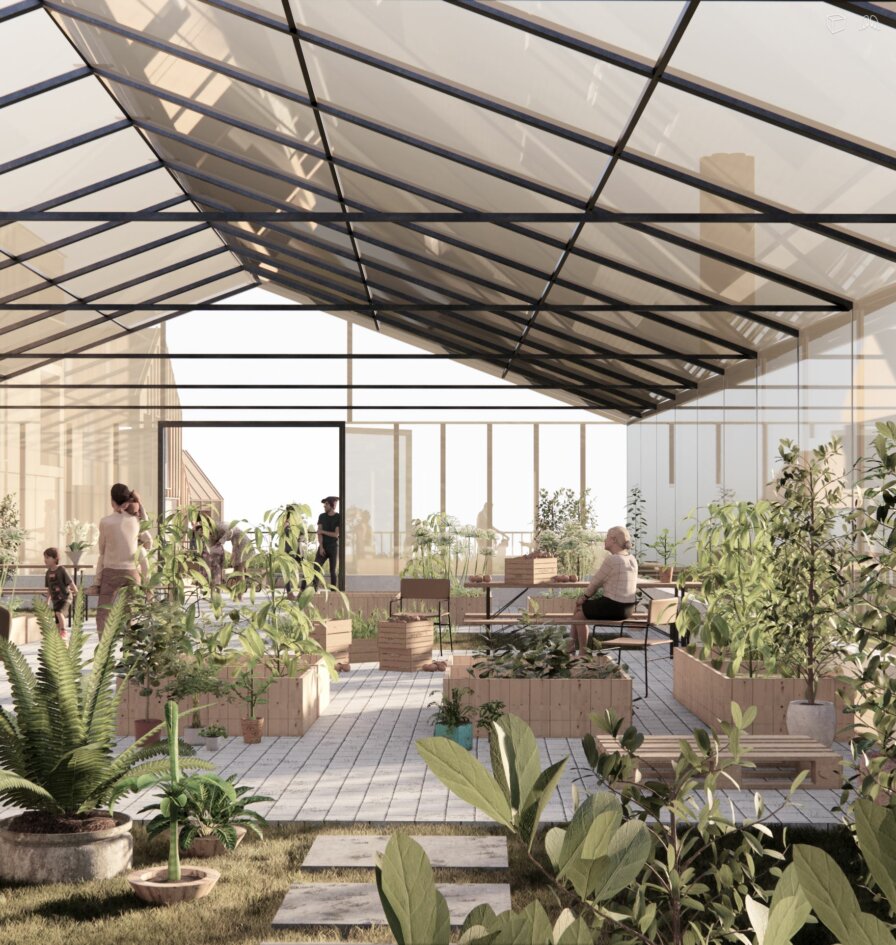
A recent article in Bergens Tidende, one of Norway’s largest newspapers, gives details on the development and design of “Smartby Montana”, the office’s experimental green neighbourhood. Initiated in 2018, the project is an ongoing collaboration between 3RW, electric energy company Eviny (owner of the plot), and housing group BOB Eiendomsutvikling. The piece reports on our sustainable vision for Montana, which is set to be the city’s most climate-friendly neighbourhood. Illustrations show key features of the 130 residential units that will sit on the grounds of Eviny’s old transformation station. Small wooden volumes and green pockets surround the historical building from 1927, with the kindergarten and Orangerie visible in the site’s upper area. Outdoor gardens, stairs and different façade openings make for a small-scaled, “tun” composition that softly ties the mountain to the existing urban grid.
Interestingly, a mention is made of other architectural proposals submitted for the competition, which envisioned block apartments and large terraced volumes for the Montana site; leaders of the project comment that 3RW’s use of smaller, traditional houses was “best suited for the area”. When putting our submission together, we debated the best typology to fit the brief – while we understand that there are space and energy associated with the “enebolig” form, we trusted that it could be modified to fit a green, future-oriented lifestyle. Flexibility, intimacy, and a respectful placement of volumes on the Ulriken hill were key drivers in the design. Yards, alleys and squares make for a pleasant, multi-scale experience for inhabitants and guests.
As noted in the article, the parking capacities of “Smartby Montana” are a hot topic. We plan to achieve our ambitious target of 0,6 parking spaces per 100 square meters of housing, a target supported by large bike parking and car sharing, and improved public transit connections to the city centre. Upcoming environmental challenges indicate a shift in movement and lifestyle, and the architectural infrastructure at Montana exemplifies one possible, exciting way of thinking about the houses and neighbourhoods of tomorrow.
The project’s webpage is here. People with a BT subscription can read the article here, in Norwegian.
18.01.2022
17.01.2022
15.12.2021
06.12.2021
29.11.2021
22.11.2021
28.10.2021
17.10.2021
05.10.2021
21.09.2021
10.09.2021
30.08.2021
27.08.2021
12.08.2021
11.08.2021
02.08.2021
30.06.2021
16.06.2021
04.06.2021
28.05.2021
22.04.2021
26.03.2021
17.03.2021
03.02.2021
01.02.2021
21.01.2021
19.01.2021
17.12.2020
16.12.2020
19.11.2020
15.11.2020
13.11.2020
12.11.2020
28.10.2020
27.10.2020
26.10.2020
19.10.2020
10.10.2020
18.09.2020
17.09.2020
11.09.2020
19.08.2020
12.08.2020
18.06.2020
12.06.2020
08.06.2020
05.06.2020
01.06.2020
26.05.2020
04.05.2020
29.04.2020
18.04.2020
17.04.2020
25.03.2020
18.03.2020
18.03.2020
28.02.2020
25.02.2020
24.02.2020
14.02.2020
31.01.2020
22.01.2020
16.01.2020
07.01.2020
05.01.2020
09.12.2019
07.12.2019
21.11.2019
21.11.2019
18.11.2019
12.11.2019
06.11.2019
05.11.2019
01.11.2019
21.10.2019
21.10.2019
16.10.2019
15.10.2019
10.10.2019
30.09.2019
18.09.2019
05.09.2019
29.07.2019
03.07.2019
06.06.2019
20.05.2019
15.05.2019
05.05.2019
02.05.2019
25.03.2019
22.03.2019
20.03.2019
14.03.2019
13.03.2019
12.03.2019
09.03.2019
04.03.2019
28.02.2019
10.02.2019
01.02.2019
20.01.2019
19.01.2019
10.01.2019
14.12.2018
07.11.2018
01.11.2018
26.10.2018
25.10.2018
11.10.2018
10.10.2018
09.10.2018
07.10.2018
06.10.2018
05.10.2018
29.09.2018
25.09.2018
29.08.2018
11.08.2018
07.08.2018
03.08.2018
24.07.2018
02.07.2018
13.06.2018
12.06.2018
07.06.2018
05.06.2018
05.06.2018
04.06.2018
01.06.2018
29.05.2018
25.05.2018
11.05.2018
04.05.2018
01.05.2018
23.04.2018
20.04.2018
15.04.2018
05.04.2018
02.04.2018
23.02.2018
21.02.2018
15.02.2018
08.02.2018
29.01.2018
25.01.2018
22.12.2017
21.12.2017
27.11.2017
25.11.2017
08.11.2017
03.11.2017
31.10.2017
25.10.2017
11.10.2017
06.10.2017
03.10.2017
30.09.2017
05.09.2017
02.09.2017
01.09.2017
10.08.2017
07.08.2017
03.08.2017
06.07.2017
01.07.2017
22.06.2017
16.06.2017
04.06.2017
24.05.2017
05.05.2017
03.05.2017
19.04.2017
05.04.2017
03.04.2017
20.03.2017
17.03.2017
10.03.2017
16.02.2017
03.02.2017
15.12.2016
03.12.2016
31.10.2016
26.10.2016
26.10.2016
01.08.2016
15.07.2016
14.06.2016
14.06.2016
13.06.2016
08.06.2016
31.05.2016
12.05.2016
30.04.2016
21.04.2016
16.03.2016
14.03.2016
02.03.2016
16.02.2016
10.02.2016
10.02.2016
10.02.2016
10.02.2016
10.02.2016
28.01.2016
17.01.2016
15.01.2016
11.01.2016
10.01.2016
15.09.2015
15.09.2015
27.08.2015
29.07.2015
08.07.2015
07.07.2015
05.07.2015
28.05.2015
28.05.2015
13.05.2015
13.05.2015
11.05.2015
11.05.2015
10.05.2015
08.05.2015
05.05.2015
05.05.2015
05.05.2015
05.05.2015
30.04.2015
28.04.2015
16.04.2015
16.04.2015
16.04.2015
10.04.2015
07.04.2015
25.03.2015
24.03.2015
23.03.2015
07.02.2015
07.02.2015
07.01.2015
01.01.2015
02.12.2014
28.11.2014
11.11.2014
10.11.2014
13.10.2014
07.10.2014
25.09.2014
22.09.2014
10.09.2014
21.08.2014
20.08.2014
18.07.2014
08.07.2014
03.07.2014
25.06.2014
20.06.2014
17.06.2014
11.06.2014
01.06.2014
25.04.2014
11.03.2014
04.03.2014
04.03.2014
27.02.2014
26.02.2014
21.02.2014
20.02.2014
18.02.2014
17.02.2014
31.01.2014
28.01.2014
19.12.2013
19.12.2013
18.12.2013
18.12.2013
20.11.2013
18.11.2013
11.11.2013
08.11.2013
31.10.2013
30.10.2013
25.10.2013
06.06.2013
05.04.2013
29.06.2012
